fgf 3d mold printer
Large-Scale FGF 3D Printers for Industrial Manufacturing
Print Meter-Scale Parts Faster, Stronger, and at 70% Lower Material Cost — Ideal for Molds, Tooling, and Functional Prototypes
What is an FGF 3D Printer?
What is an FGF 3D Printer?
FGF (Fused Granular Fabrication) is an advanced additive manufacturing technology that uses thermoplastic pellets or composite materials as raw feedstock. Unlike traditional filament-based systems, FGF 3D printers directly melt and extrude plastic granules through a heated nozzle to build parts layer by layer.
Compared with conventional FDM (Fused Deposition Modeling), FGF technology eliminates the need to convert plastic pellets into filament. This allows manufacturers to use industrial-grade plastic pellets directly, significantly reducing material costs and increasing production efficiency.
How Does an FGF 3D Printer Work?
An FGF 3D printer uses a screw extrusion system to transport plastic pellets from a hopper into a heated chamber. The material is melted and precisely deposited layer by layer to create large-scale 3D objects.
This direct pellet extrusion process makes FGF technology ideal for:
- Large-format 3D printing
- Rapid prototyping
- Functional part manufacturing
- Low-cost production
Meter-Scale 3D Printing at 10× Speed
Collection
Replace Traditional Mold Making
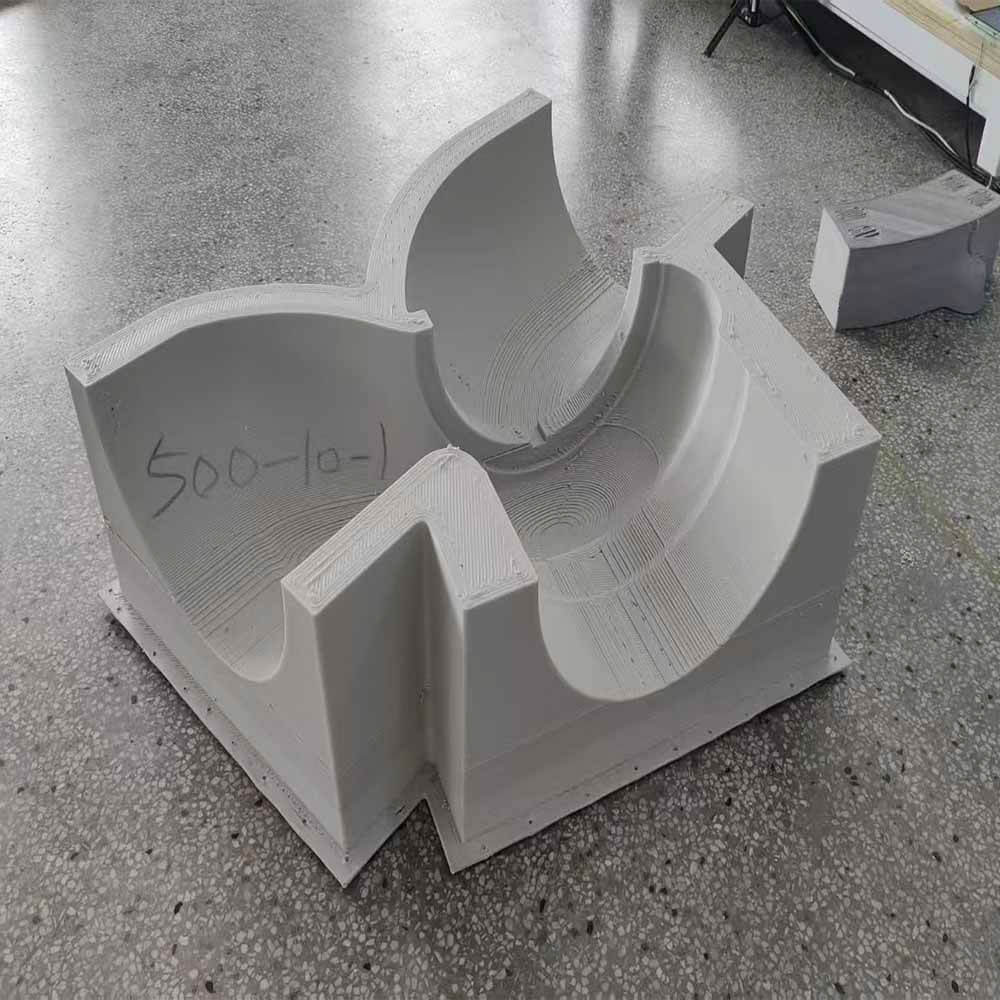
Print Casting Patterns Faster, Lower Cost, and with Full Design Freedom
Real Applications. Proven Results.
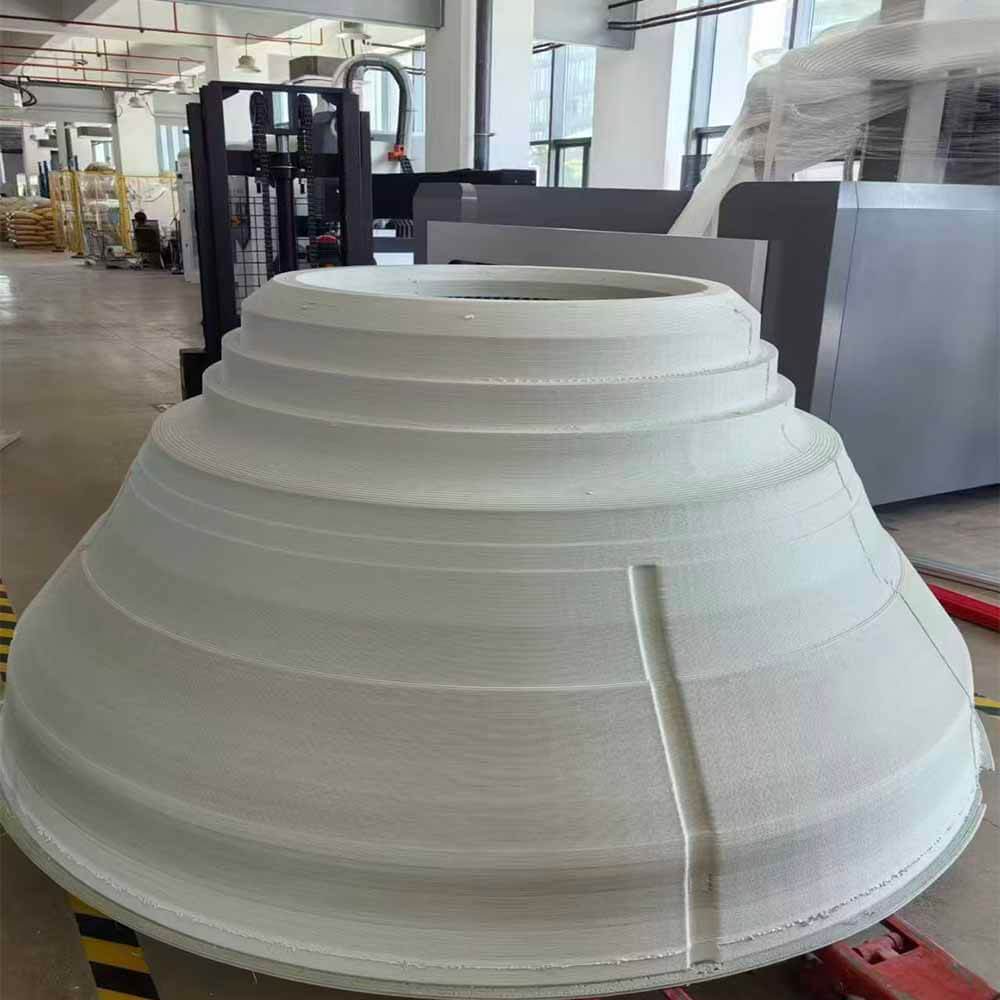
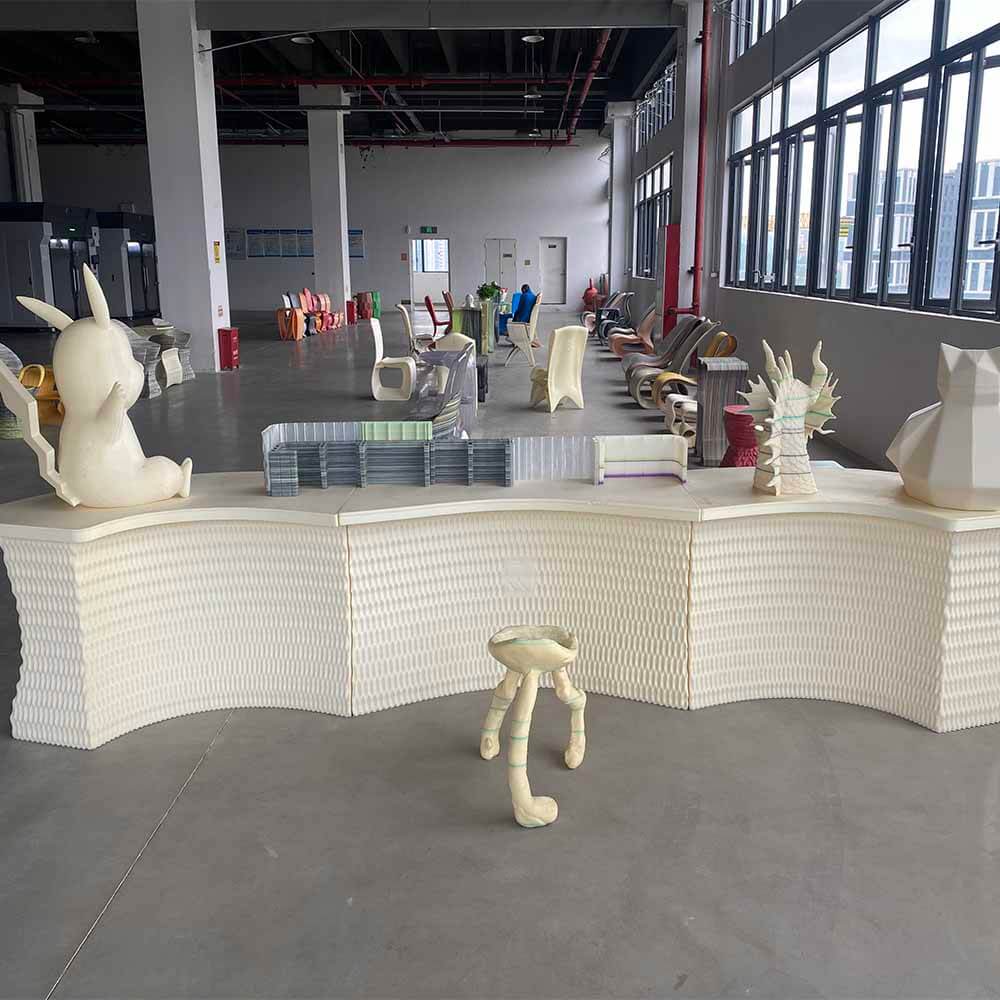
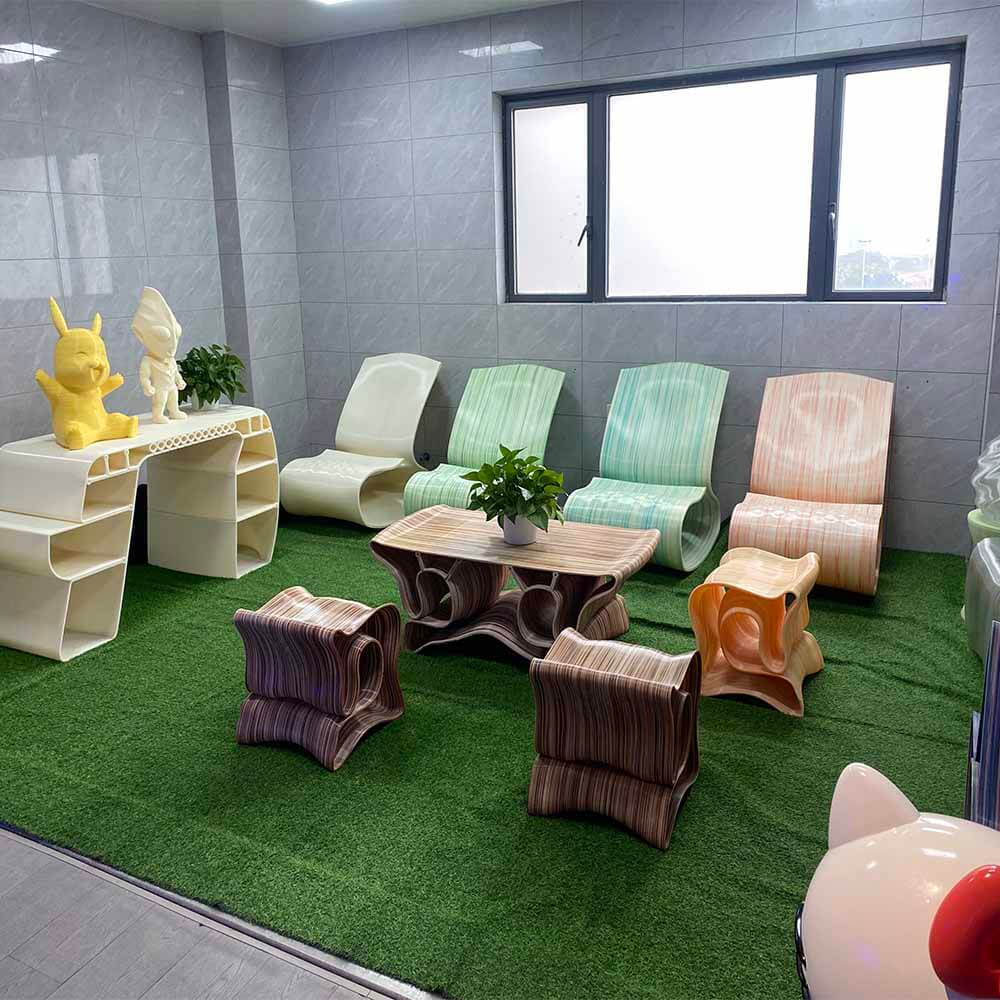
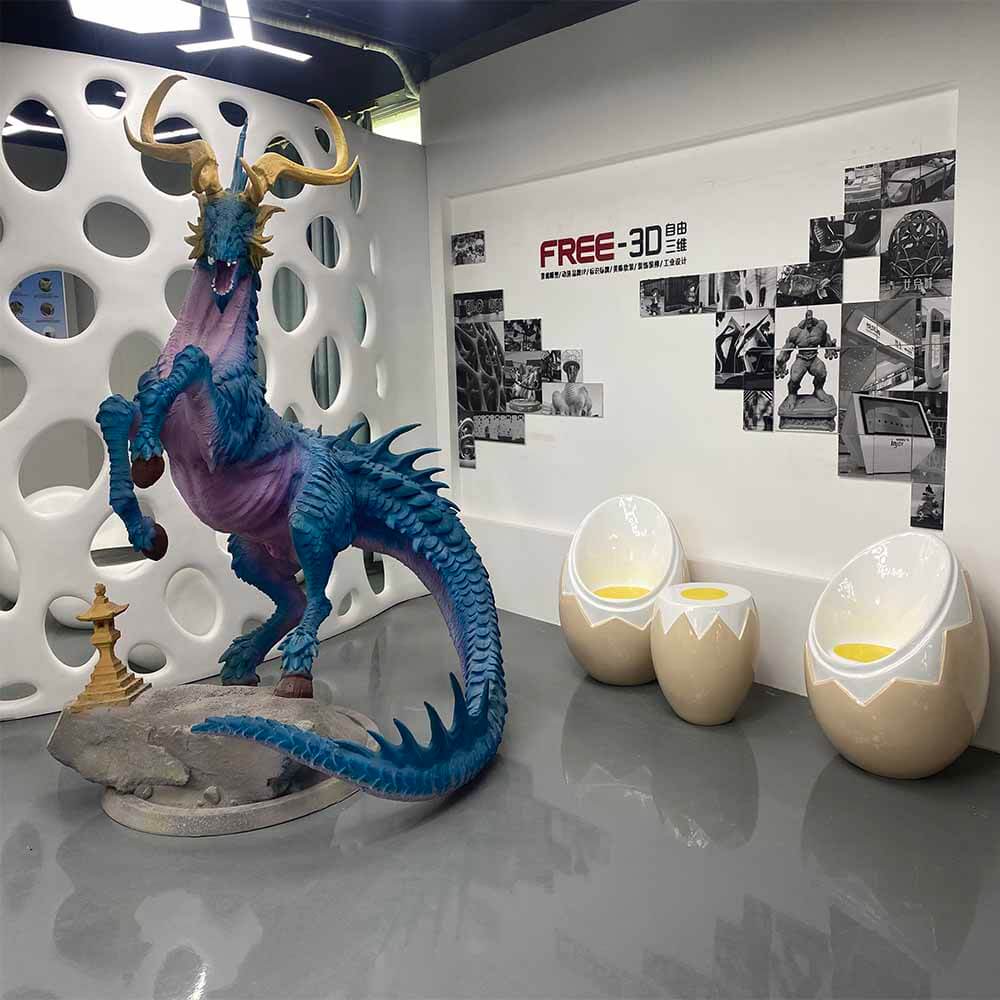
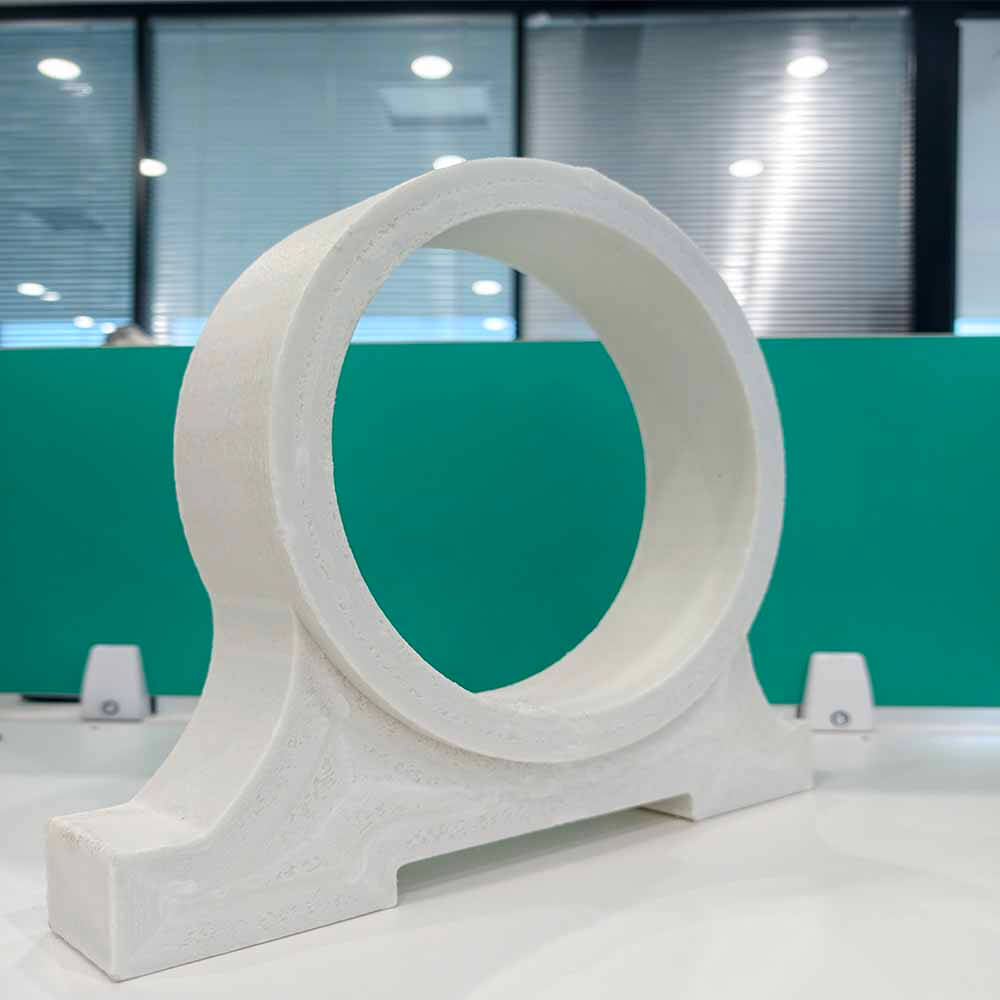
Explore real-world parts produced by our large-scale FGF 3D printers — from molds and casting patterns to functional industrial components.Our machines are trusted across industries to manufacture large, complex, and cost-efficient parts. Whether you need casting molds, tooling, prototypes, or end-use components, FGF technology delivers unmatched speed, flexibility, and material savings.
Applications of FGF 3D Printers
Automotive & Aerospace
Manufacture large-scale prototypes, lightweight structures, and functional tooling for automotive and aerospace industries.
Architecture & Sculpture
Produce large decorative structures, artistic sculptures, and customized furniture with high efficiency.
Education & Research
Widely used in universities and labs for advanced manufacturing research and hands-on training.
Medical Industry
Create custom rehabilitation devices, medical models, and personalized healthcare products.
Core Advantages of FGF Technology
Powerful Material Compatibility & Customization
FGF (Fused Granular Fabrication) enables direct use of a wide range of engineering-grade thermoplastics, including reinforced nylon and high-performance materials like PEEK.
More importantly, this pellet 3D printing technology allows users to:
- Mix different colors and material properties freely
- Add recycled plastics for cost reduction
- Integrate fiber-reinforced materials for enhanced strength
This makes FGF ideal for custom composite material development and industrial mold manufacturing applications.
FGF 3D printing is a key solution for sustainable and circular manufacturing.
Production waste and failed prints can be:
- Crushed and reused as raw material
- Reintroduced directly into the printing process
This approach:
- Reduces material waste significantly
- Lowers production costs
- Supports eco-friendly and sustainable manufacturing goals
Significant Environmental Benefits
Traditional Manufacturing vs FGF 3D Printing
| Comparison | Traditional Pattern Making | FGF 3D Printing |
|---|---|---|
| Manufacturing Method | Subtractive manufacturing: cutting and carving solid wood blocks | Additive manufacturing: layer-by-layer deposition using plastic pellets |
| Production Time | Long (days to weeks): relies on skilled labor and complex processes | Fast (hours to days): direct digital workflow with full automation, up to 10x faster |
| Design Flexibility | Limited: complex curves and internal structures are difficult and expensive | High freedom: easily produce complex geometries, topology optimization, and internal channels |
| Material & Cost | Limited to wood materials with relatively high maintenance cost | Wide range: compatible with ABS, ASA, PETG, PLA and engineering plastics. Material cost reduced by 65%–90% compared to filament |
| Best Applications | Small batch production requiring wood texture finish | Large-scale prototypes, industrial molds, custom tooling, functional parts, architectural structures, and sculptures |
| Modification & Reusability | Difficult: requires rebuilding molds from scratch | Easy: modify digital files and reprint anytime, permanent file storage |
Advantages of FGF Large-Scale 3D Printers
Large-Format Printing & High Efficiency
One-Piece Large Part Fabrication – Capable of directly printing meter-scale components without assembly, ensuring structural integrity. Ideal for construction, sculpture, automotive prototypes, and other large-format applications.
Ultra-Fast Printing Speed – With high pellet feed rates and large extrusion flow, FGF printers achieve volume printing speeds 5–10 times faster than traditional filament 3D printers, significantly reducing lead times.
Exceptional Cost Efficiency
Low Material Costs – Uses industrial-grade plastic pellets directly, avoiding secondary filament processing costs. Material expenses can be 65%–90% lower than equivalent filament-based printing.
High Material Utilization – Supports recycling of waste and support material, reducing long-term consumable costs and aligning with circular economy principles.
Unmatched Material Flexibility
Wide Material Compatibility – Supports everything from general industrial plastics to high-performance engineering plastics.
On-Site Composite Customization – Users can mix carbon fiber, glass fiber, or other additives into pellets for enhanced performance, or blend different colors for custom outputs. No pre-mixed filaments are required.
Powerful Functionality & Design Freedom
Functional End-Use Parts – High-strength engineering materials allow direct printing of jigs, fixtures, and functional components.
Design Flexibility – Transform concepts into large-scale, functional parts quickly and cost-effectively. Direct pellet usage gives designers and engineers unprecedented freedom in materials, cost, and production efficiency.
Sustainability & Environmental Benefits
Eco-Friendly Materials – Pellet packaging reduces plastic waste compared to filament spools.
Recyclable Feedstock – Supports a more sustainable additive manufacturing process.
Ease of Maintenance & Stability
Robust Screw Extrusion System – Resistant to clogging, simple maintenance, and stable for continuous industrial production.
How FGF 3D Printing Transforms the Casting Industry
While industrial 3D printing has matured, many companies struggle to fully leverage its potential in traditional casting due to fragmented equipment, software, and workflow. Conventional wooden mold production remains time-consuming, costly, and design-limited. Standard “point solutions” in the market often fail to deliver real efficiency improvements.
FGF’s solution provides a fully integrated, end-to-end additive manufacturing platform that combines design, production, and management into a seamless workflow.
Solution-Level Advantages
Seamless Workflow – One-click operation from model to finished part eliminates manual steps and boosts production efficiency.
Data-Driven Production – Every print becomes an opportunity to optimize manufacturing processes through data collection, analysis, and process improvement.
Proactive Management – AI and data analytics enable predictive maintenance and active quality control, identifying potential issues before they disrupt production.
Industrial-Grade Hardware – Built for harsh production environments, ensuring stable and reliable industrial operation.
Tool-Level Challenges Solved
- Fragmented Workflows – Traditional printing requires multiple software and manual steps across design, slicing, uploading, and monitoring.
- Data Silos – Device data, process parameters, and production history often remain isolated, limiting optimization opportunities.
- Reactive Equipment Management – Relying on manual inspection leads to downtime and high maintenance costs.
- Hardware Limitations – Consumer-grade 3D printers cannot meet the demands of industrial-scale production.
Send Your Drawing & Get a Solution
Upload your file and our engineers will provide a fast, cost-effective printing plan.